
Double-Sided, High-Capacity, High-Frequency, Low CL Value Origin Code Vortex DDR5 96 GB (48 GB x 2) Memory Unboxing and Review
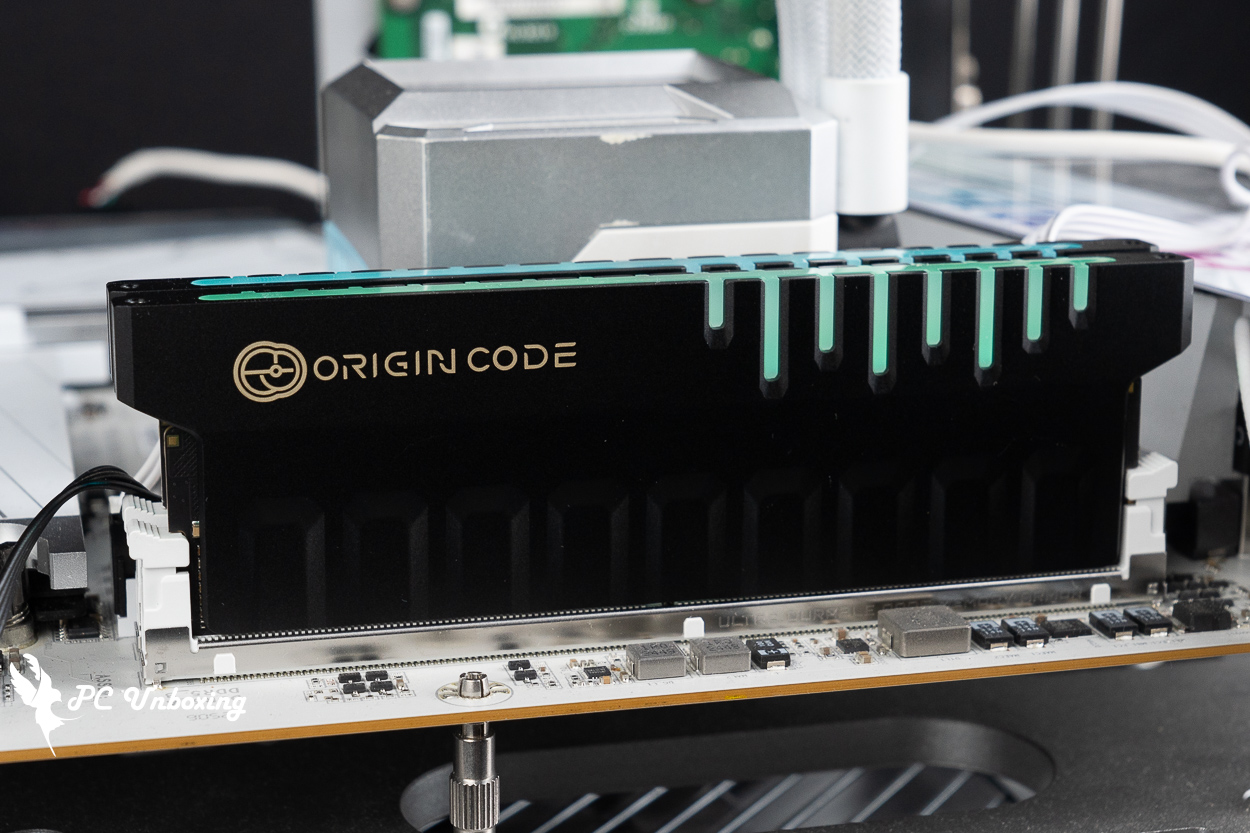
To show ASRock X870E Taichi OCF、GIGABYTE X870 AORUS TACHYON ICE...To truly unleash the full potential of these AM5 1DPC dual-slot overclocking motherboards, you need to pair them with “powerful weapons” like high-capacity, high-frequency UDIMM memory modules featuring dual-sided chips—and the memory kit we’re unboxing today meets exactly those specifications.
To save time: These specifications are too strict; even when paired with motherboard models listed on the product’s own QVL, there are cases where the processor’s performance varies. The QVL list on the product page appears to have been compiled by Origin Code based solely on their own testing, and for some specifications, the QVL cannot be found on the motherboard side. As a result, there’s a high probability that the CPU’s memory controller characteristics won’t be compatible, preventing the system from booting (which happened to me), or even if it does boot, since there’s no optimization on the motherboard side, the training process takes a very long time every time the system starts up.
Origin Code Vortex DDR5 96 GB (48 GB x 2) Memory Specifications:
QVL Inquiry Number: OCL602696D-VB
Memory capacity: 96 GB (48 GB x 2)
Overclocking frequency: DDR5 6000 MT/s (EXPO 1 & XMP 1), DDR5 8000 MT/s (EXPO 2)
Overclocking timings: CL26-35-35-72 (EXPO 1 & XMP 1), CL36-47-47-102 (EXPO 2)
Overclocking voltage: 1.45V
Specification: 288-Pin DDR5 UDIMM
Warranty: Product Life Cycle Warranty (until discontinued), Fan Module 3 years
Dimensions: 145.2 x 8.5 x 47.3 mm (length x thickness x height)
Profile parameters: Intel XMP 3.0 certification (Extreme Memory Profile), AMD EXPO certification (Extended Profiles for Overclocking)
Double-sided modules actually dare to run at high frequencies!? Origin Code Vortex DDR5 96 GB (48 GB x 2) Memory Unboxing
I did an unboxing of one that a friend bought earlier Origin code vortex DDR5 48 GB (24 GBx2) MemoryLater, after the Taiwanese distributor began stocking them, I purchased a set for myself. At the time, I was particularly interested in the SS (single-sided) single-sided memory modules with 1R (1-rank) specifications because their SPD contained the following settings: 6000 MT/s CL26-36-36-76 1.45V (XMP 3.0, AMD EXPO 1 Profile), while the AMD EXPO 2 profile was set to 8000 MT/s CL36-47-47-108 1.45V, allowing the kit to offer both low CL values and high frequencies as options.
Later, I noticed another set with specifications similar to the overclocking profile, but the tRCD, tRP, tRAS were even tighter than those of the SS single-sided modules. It was a dual-channel memory kit with a capacity of 48 GB x2, featuring DS (Double Sided) modules and a 2R (2 Rank) layout. It’s important to note that when more memory chips are used to double the capacity, the difference in overclocking stability between SS and DS is quite significant. Therefore, I was quite intrigued by the fact that they dared to set a DDR5 8000 MT/s specification for double-sided chips—especially given their operation on standard UDIMM memory. Before this memory kit went into mass production, the highest frequency I had ever seen on the DS UDIMM memory QVL was 7200 MT/s at most.
However, after memory manufacturers introduced Quad-Rank ultra-high-capacity memory modules with CKD support—specifically, 4-rank CUDIMMs, also known as CQ-DIMMs—for Intel platforms (AMD platforms do not fully support CKD memory), the unique features of this Origin Code 2R 8000 MT/s UDIMM seemed to pale in comparison almost instantly.
The “launch” price of the Vortex DDR5 96 GB (48 GB x 2) memory kit is roughly 27,000 New Taiwan Dollars. I originally planned to borrow one from a fellow netizen who bought it during the launch, but it seems everyone is focused on reselling brand-new units to make a small profit from the price difference. Well, since I couldn’t borrow one from anyone, I decided to buy my own. During the 618 sales event, I purchased it from Taiwan’s largest outlying island in western Taiwan using a discount coupon, which came to approximately 30,876 NTD + 463 NTD in handling fees = 31,339 NTD.
Although this brand is now represented in Taiwan by Zengniqiang, I’ve been looking for this specific model for a long time and haven’t seen it listed anywhere, so I ended up buying it from a non-authorized seller. However, I’ve recently heard that some users in Taiwan who sent their SSDs to that distributor for repairs haven’t received any responses to their after-sales inquiries—they’ve had to follow up repeatedly. So, I’m wondering how this distributor’s after-sales service is rated… Hmm… Good luck to everyone. It seems a bit sketchy.
△ Origin code vortex DDR5.
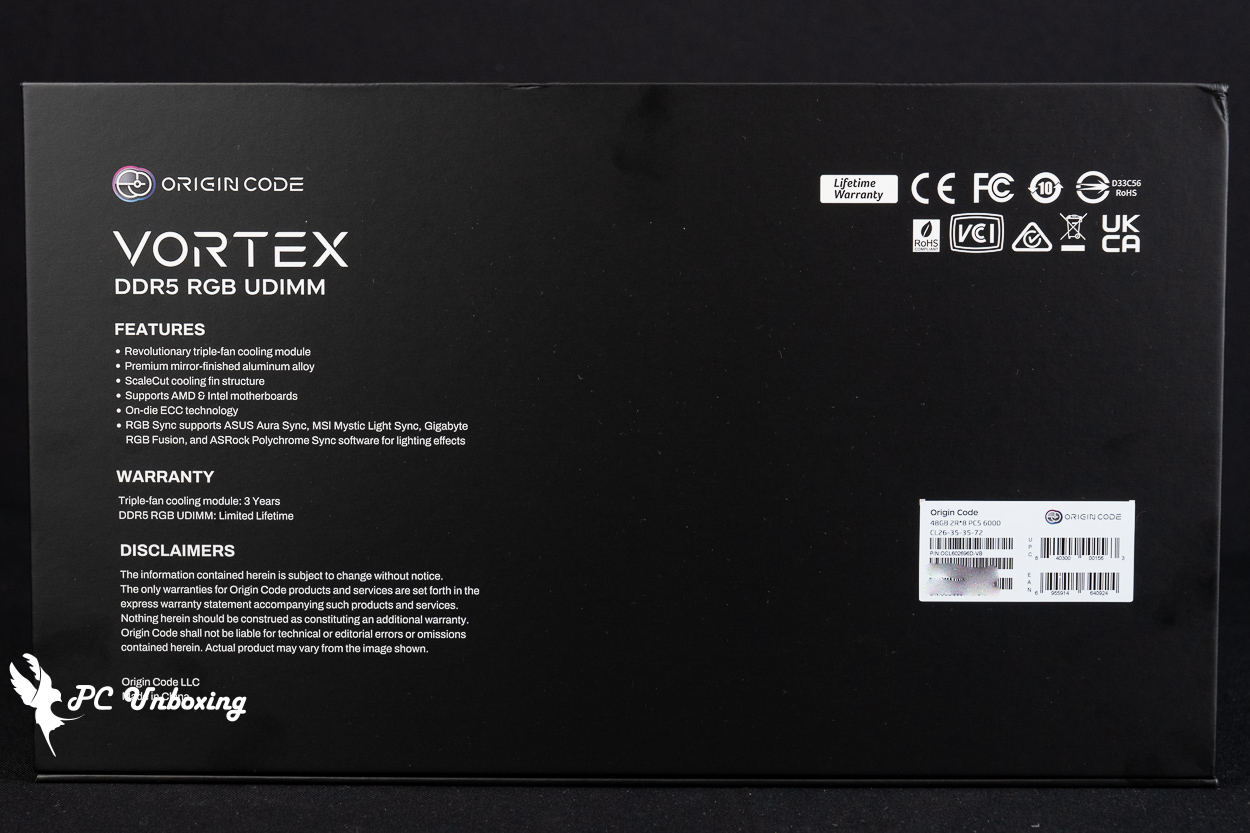
△ Product Features.
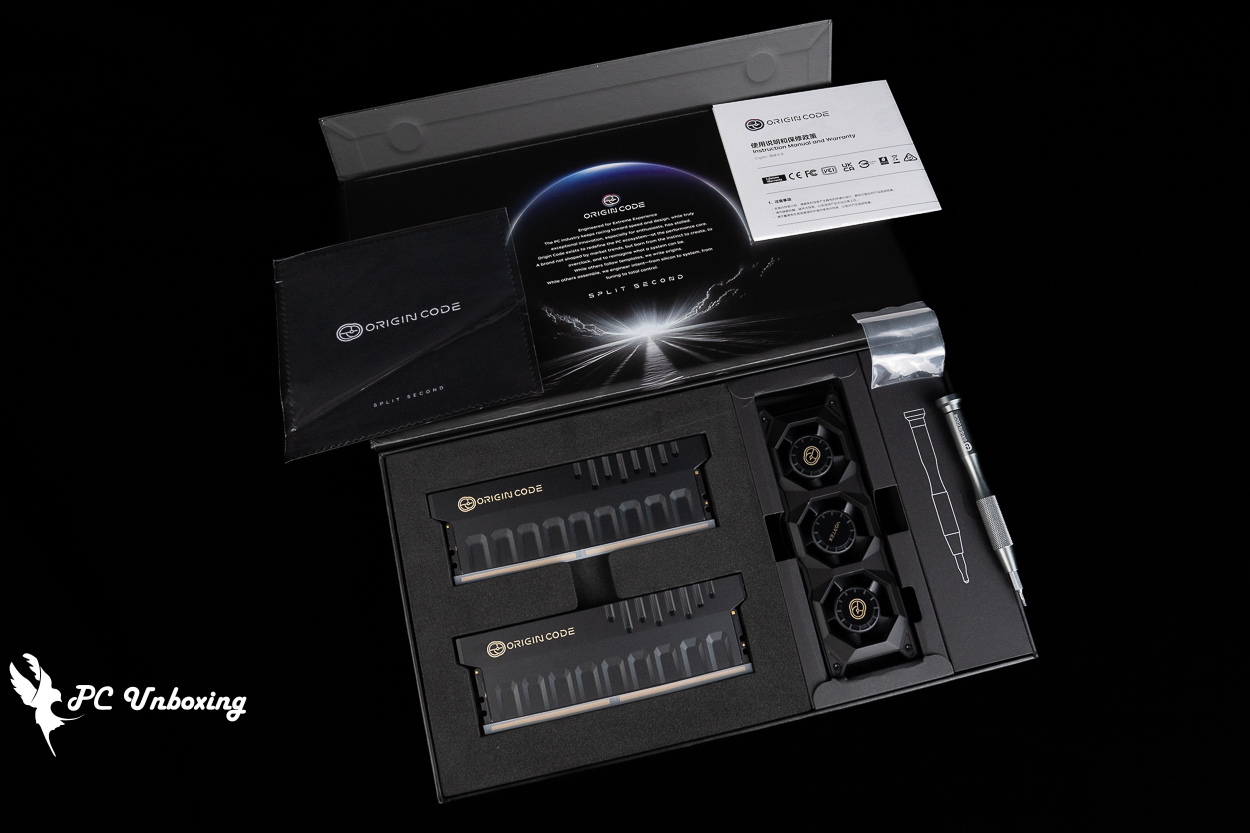
△ Package contents: lens cleaning cloth, memory module, memory fan module, screwdriver and screws for securing the fan.
I won't go into too much detail about the appearance—basically, it just features a matte black-and-gold heatsink, and the dimensions and everything else are the same as Origin code vortex DDR5 48 GB (24 GBx2) MemoryPretty much.
What’s particularly noteworthy is that the QVL for the EXPO 2 8000 MT/s Profile on the sales page includes X870 AORUS TACHYON ICE, but when I checked the motherboard’s official website, I couldn’t find it, so it seems the Origin code was “verified and added manually.” If you can’t open it, you’ll have to contact the Origin code provider to complain. If you want to try fixing it yourself, you can refer to this site’s “DDR5 Memory Common Problems and Related Solutions》Tutorial.
Speaking of which, some users of GIGABYTE Z690 or Z790 motherboards have reported that they cannot see “EXPO 2” in the memory profile options within the BIOS, although they can read the SPD data separately. but other users with the X870E APEX or Z890 boards can see both. It seems to be a limitation in the BIOS’s operational logic—it’s simply not designed to let you use a second profile—so GIGABYTE users should be aware of this.
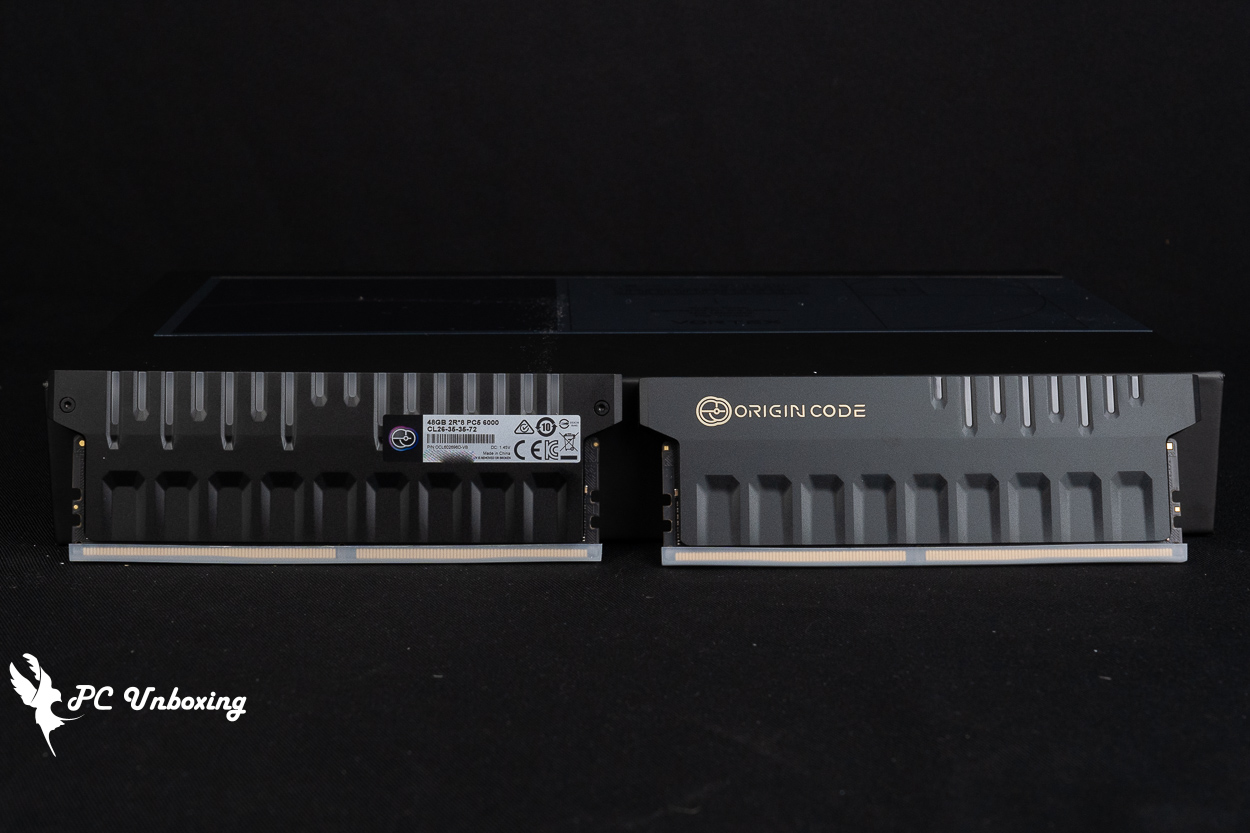
△ Black-gold matte heat sink and specification sticker on the back.
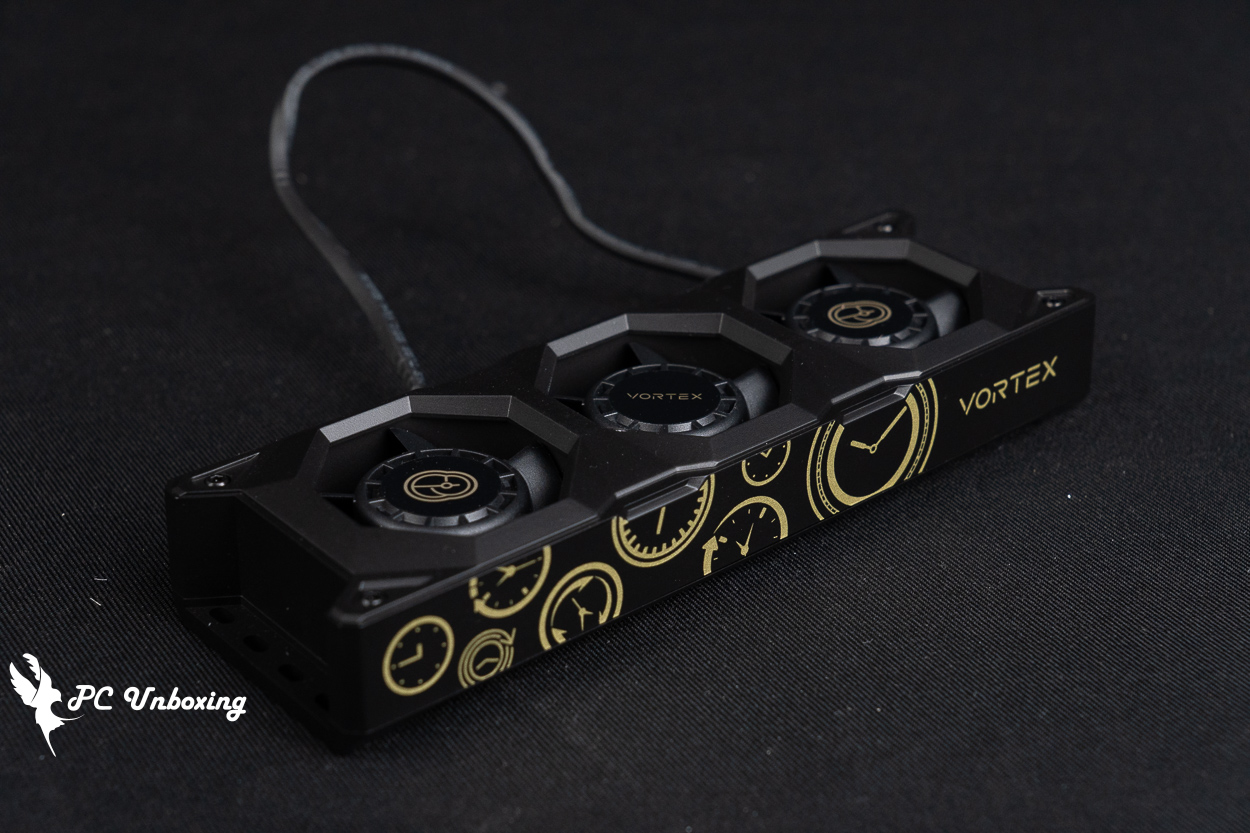
△ Black-and-gold active cooling fan.
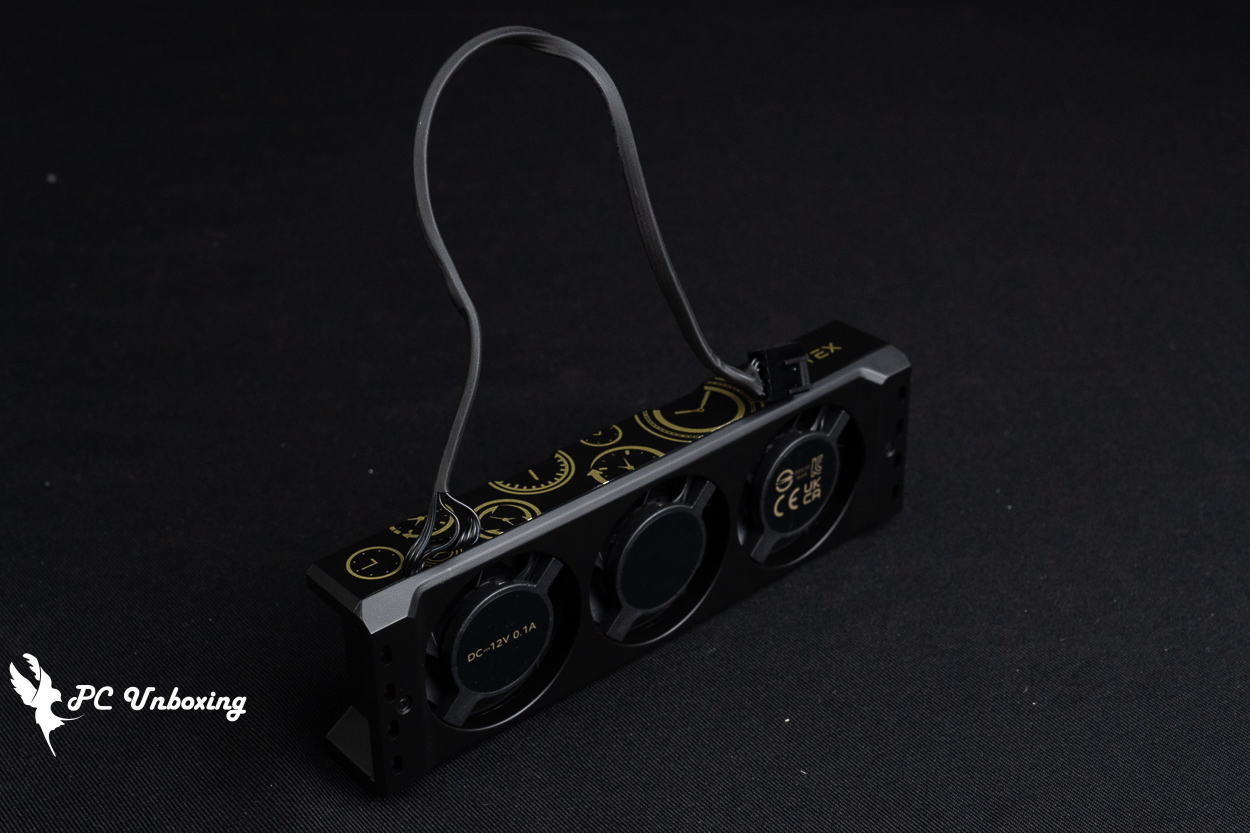
△ One 4-pin PWM power connector.
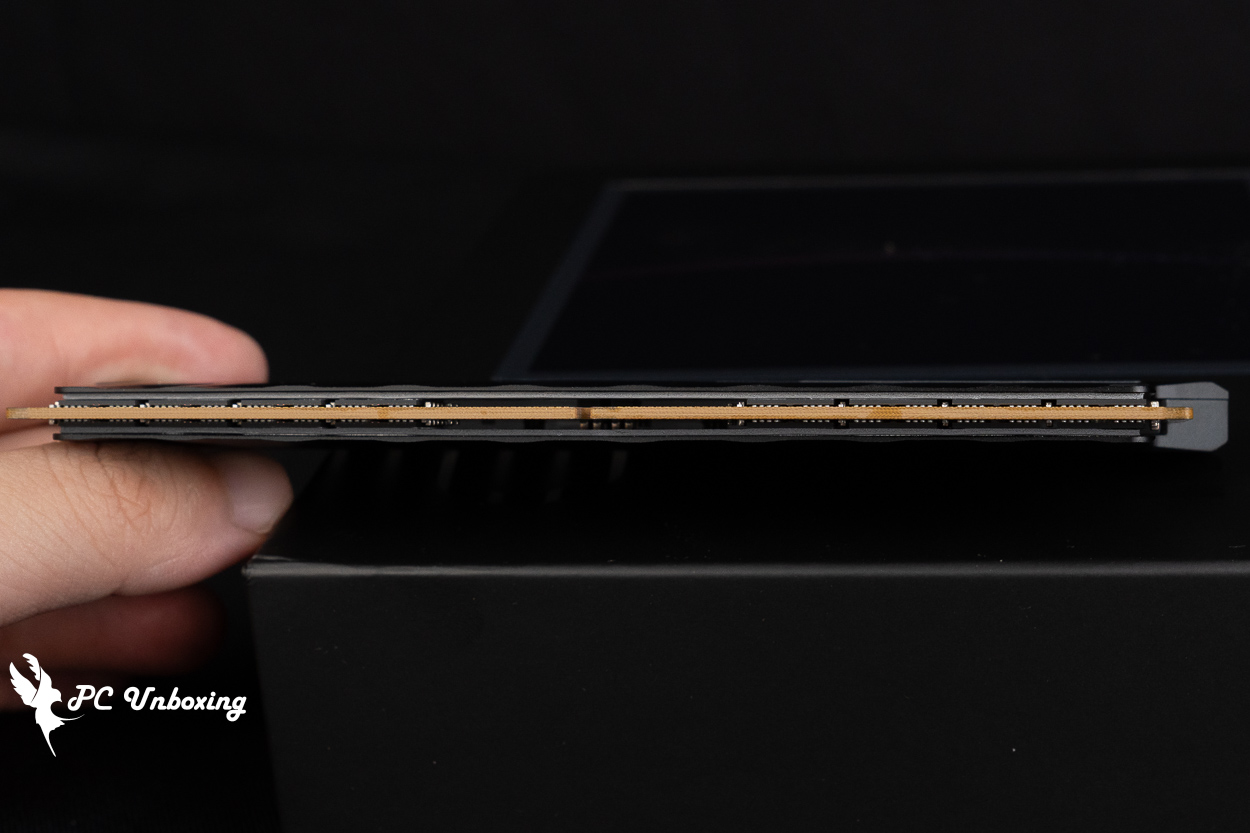
△ DS (Double Sided) dual-sided chips, 2R (2 Rank), sixteen 3 GB (3072 MB) chips.
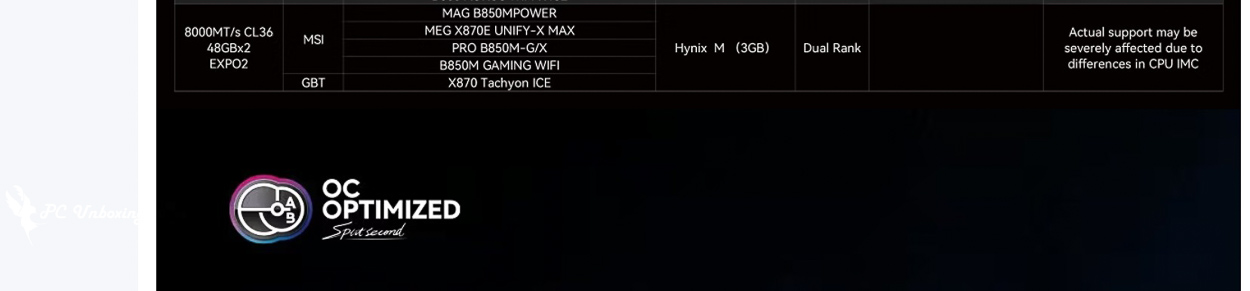
△ The official QVL list for this memory is 8000 CL36-47-47-102 (EXPO 2), but IGIGABYTE X870 AORUS TACHYON ICE I couldn't find any certification specifications for this brand on the official website, so this information was provided by the memory brand itself. Its reliability for stable use is certainly not as good as that of brands that have been certified by both parties.
Intel Core Ultra 9 285K with GIGABYTE Z890 AORUS TACHYON ICE Platform DDR5 Memory Performance Test
See how this memory performs on Intel platforms with Intel Core Ultra 200S series processors that support DDR5 memory, using the Intel Core Ultra 9 285K processor and GIGABYTE Z890 AORUS TACHYON ICE Motherboard: To test the performance and overclocking potential of this set of DDR5 memory modules, I updated the motherboard BIOS to the latest version before running the tests.
This memory test "does not enable the motherboard's memory score optimization settings" or manual overclocking adjustments, so as to present the performance of directly applying the memory profile, so that there will be no motherboard factors interfering with the results, and the motherboard's Gear mode and crossover mode are kept automatically for the motherboard to adjust, and of course, will not be turned off through the E-Core or the use of the Thin Overclocking version of the system to obtain the best scores. Of course, there is no need to disable E-Core or use a thinned down overclocked system to get the best results, but rather, the test is conducted purely on a normal Win11 system with the full default processor, which is more in line with the direct usage scenario.
Testing Platform
Processor:Intel Core Ultra 9 285K QS
Cooler: Valkyrie E360 (full speed)
Thermal paste: Cooler Master MASTERGEL MAKER 40g (thermal conductivity 11W/mK)
Motherboard:GIGABYTE Z890 AORUS TACHYON ICE(BIOS Version: F7)
Memory: Origin Code Vortex DDR5 96 GB (48 GB x 2)
Graphics: NVIDIA GeForce RTX 4060 Ti Founders Edition 8GB
Operating System: Windows 11 Professional 24H2
System Drive: Plextor PCIe Gen3 x4 M.2 2280 SSD 512GB
Game Dish:XPG GAMMIX S70 PRO PCIe Gen4 x4 M.2 SSD 4TB
Power supply:MONTECH TITAN PLA 1000W
Case: STREACOM BC1 Benchtable V2
In the motherboard’s BIOS, you can see that this memory kit comes with three built-in overclocking profiles: two of them—DDR5 6000 MT/s CL26-35-35-72 1.45V—are for AMD EXPO and XMP 3.0, while the other, higher-frequency profile—8000 MT/s, CL36-47-47-102, 1.45V—is for the AMD EXPO 2 profile.
Use the ASRock Timing Configurator to view information about this memory set; after enabling the profile on an Intel platform, you’ll see all the important details, such as memory timings, voltages, and Gear Mode.
- Default (JEDEC): DDR5 5600 MT/s CL50-45-45-90 1.1V
- XMP Profile / EXPO Profile 1: DDR5 6000 MT/s CL26-35-35-72 1.45
- EXPO Profile 2: DDR5 8000 MT/s CL36-47-47-102 1.45V
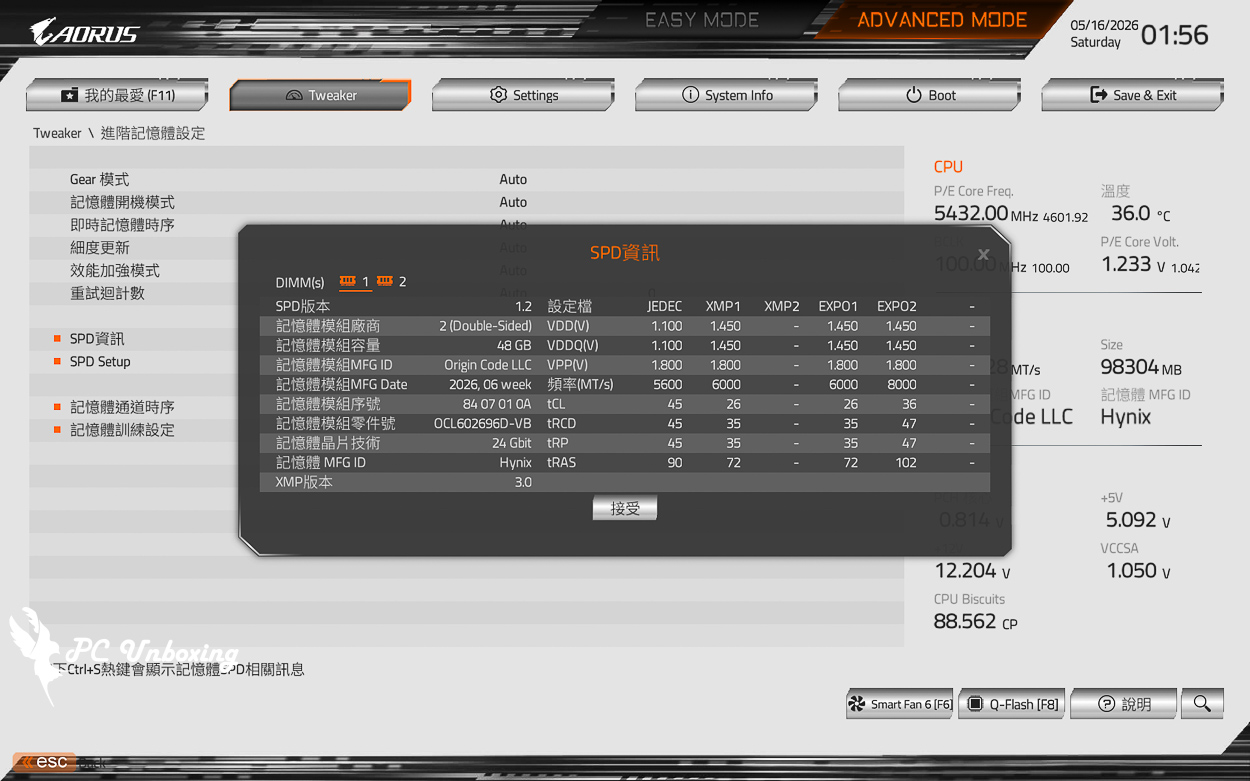
△ DDR5 Profile view.
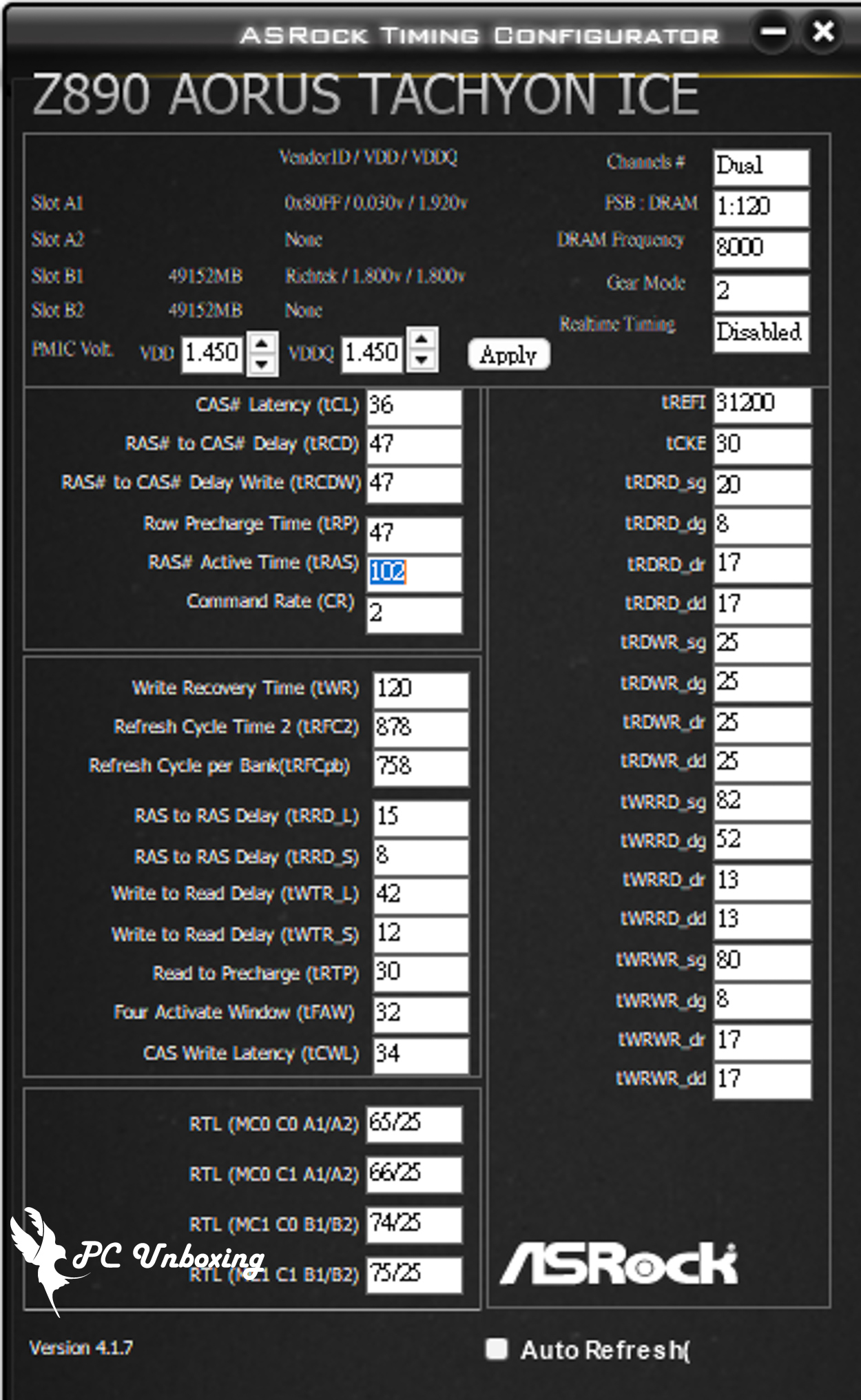
△ ASRock Timing Configurator information view.
由 CPU-Z Let’s take a look at the test platform and the overclocking profile information written to the SPD HUB. On the SPD page, you can see that this memory module uses SK Hynix memory chips and includes Intel XMP 3.0 (Extreme Memory Profile) and AMD EXPO (Extended Profiles for Overclocking) one-click overclocking profiles.
However, only three Profile parameters are programmed in the SPD HUB, the rest are JEDEC timing frequency parameters.
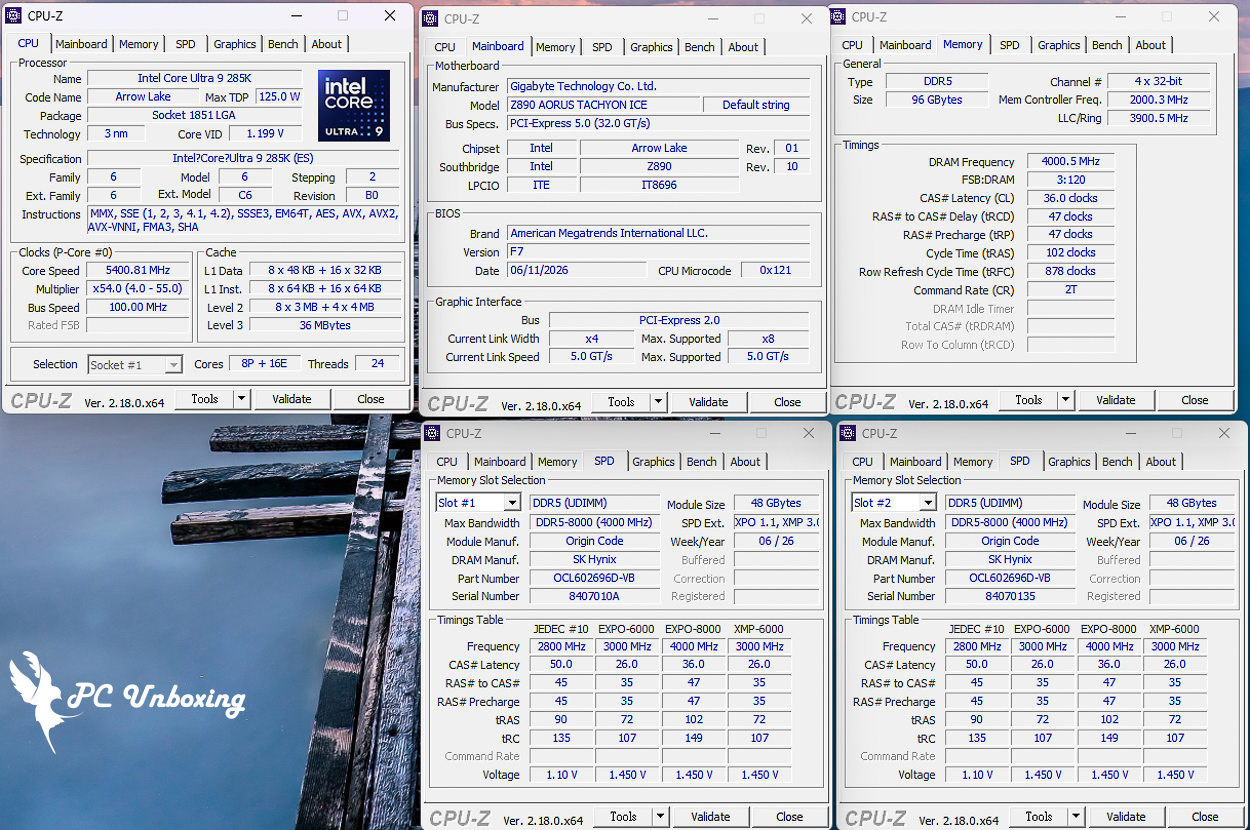
△ Intel platform CPU-Z with EXPO Profile 2 information.
AIDA64 Cache & Memory Benchmark It is mainly used to test the performance of processor caches and RAM. The read/write/copy bandwidth performance score represents the rate of transfer between CPU and memory, which means the efficiency of data throughput (the higher the score, the better), and the time delay score of accessing data indicates the responsiveness of the memory system.
With EXPO Profile 2 enabled, the read speed was 115 GB/s, the write speed was 102.8 GB/s, the copy speed was 109.1 GB/s, and the latency was 83.3 ns.
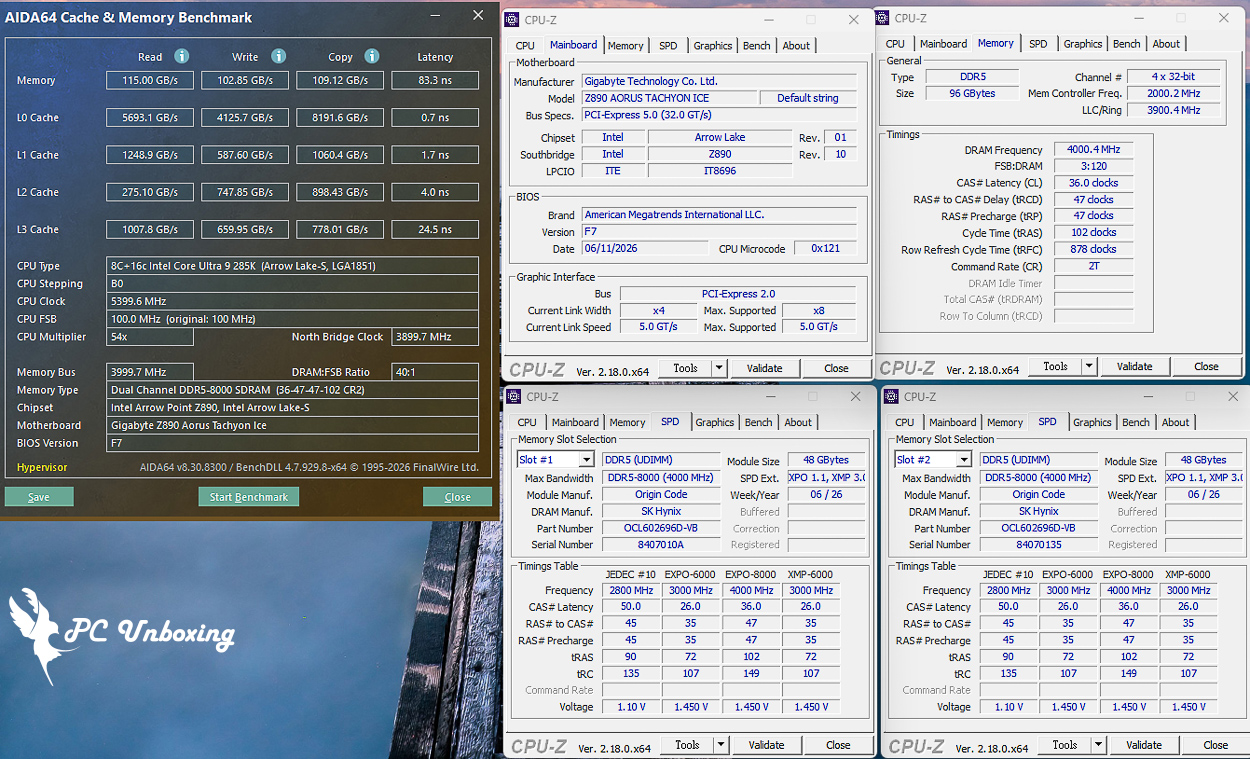
△ EXPO Profile 2: 8000 MT/s CL36-47-47-102 1.45V—Intel platform test results.
AMD Ryzen 9 9950X3D2 and ASRock X870E Taichi OCF Platform DDR5 Memory Performance Test
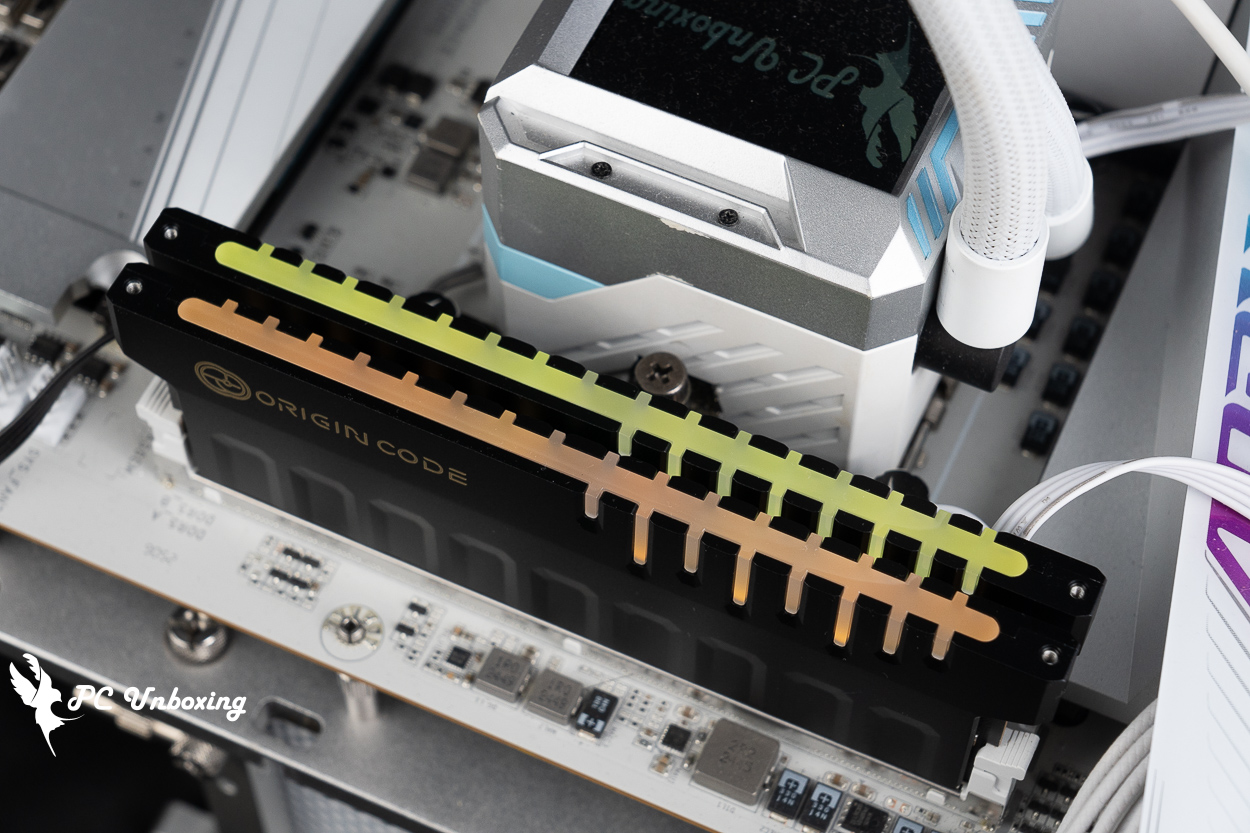
Using the AMD Ryzen 9000 platform with DDR5 memory support, see how this memory performs on the AMD platform using the AMD Ryzen 9 9950X3D2 Dual Edition processor and ASRock X870E Taichi OCF Motherboard: To test the performance and overclocking potential of this set of DDR5 memory modules, I updated the motherboard BIOS to the latest version before running the tests.
For this memory test, we “will not enable the motherboard’s memory benchmark optimization settings” or make any manual overclocking adjustments. This is to demonstrate the performance achieved by directly applying the memory profile, ensuring that the results are not influenced by motherboard-related factors. The motherboard’s UCLK Mode will be set to “Auto” so that the motherboard can adjust it on its own. Of course, we did not disable CPU cores or use a stripped-down overclocking system to achieve optimal results. Instead, we conducted the tests using a standard Windows 11 system with all CPU settings at their defaults, which more closely reflects real-world usage scenarios.
Testing Platform
Processor:AMD Ryzen 9 9950X3D2 Dual Edition
Motherboard:ASRock X870E Taichi OCF (BIOS Version: 4.41)
Memory: Origin Code Vortex DDR5 96 GB (48 GB x 2)
Cooler: LIAN LI GA II Trinity SL-INF 360 (full speed)
Thermal paste: Cooler Master MASTERGEL MAKER 40g (thermal conductivity 11W/mK)
Water cooling fan: 3x XPG VENTO PRO 120 PWM (full speed)
Graphics: NVIDIA GeForce RTX 4060 Ti Founders Edition 8GB
Operating System: Windows 11 Professional 24H2
Power Supply: MONTECH BETA 2 850W
Chassis:MONTECH TG3
In the motherboard’s BIOS, you can see that this memory kit comes with three built-in overclocking profiles: one—DDR5 6000 MT/s CL26-35-35-72 1.45V—is for AMD EXPO and XMP 3.0, while another, higher-frequency profile—8000 MT/s, CL36-47-47-102, 1.45V—is intended for the AMD EXPO 2 profile.
Using ZenTimings to display this information, once the Profile is enabled on an AMD platform, all key details—including memory timings, voltages, Infinity Fabric frequency, and memory controller frequency—are shown.
- Default (JEDEC): DDR5 5600 CL50-45-45-90 1.1V
- XMP Profile / EXPO Profile 1: DDR5 6000 MT/s CL26-35-35-72 1.45
- EXPO Profile 2: DDR5 8000 MT/s CL36-47-47-102 1.45V
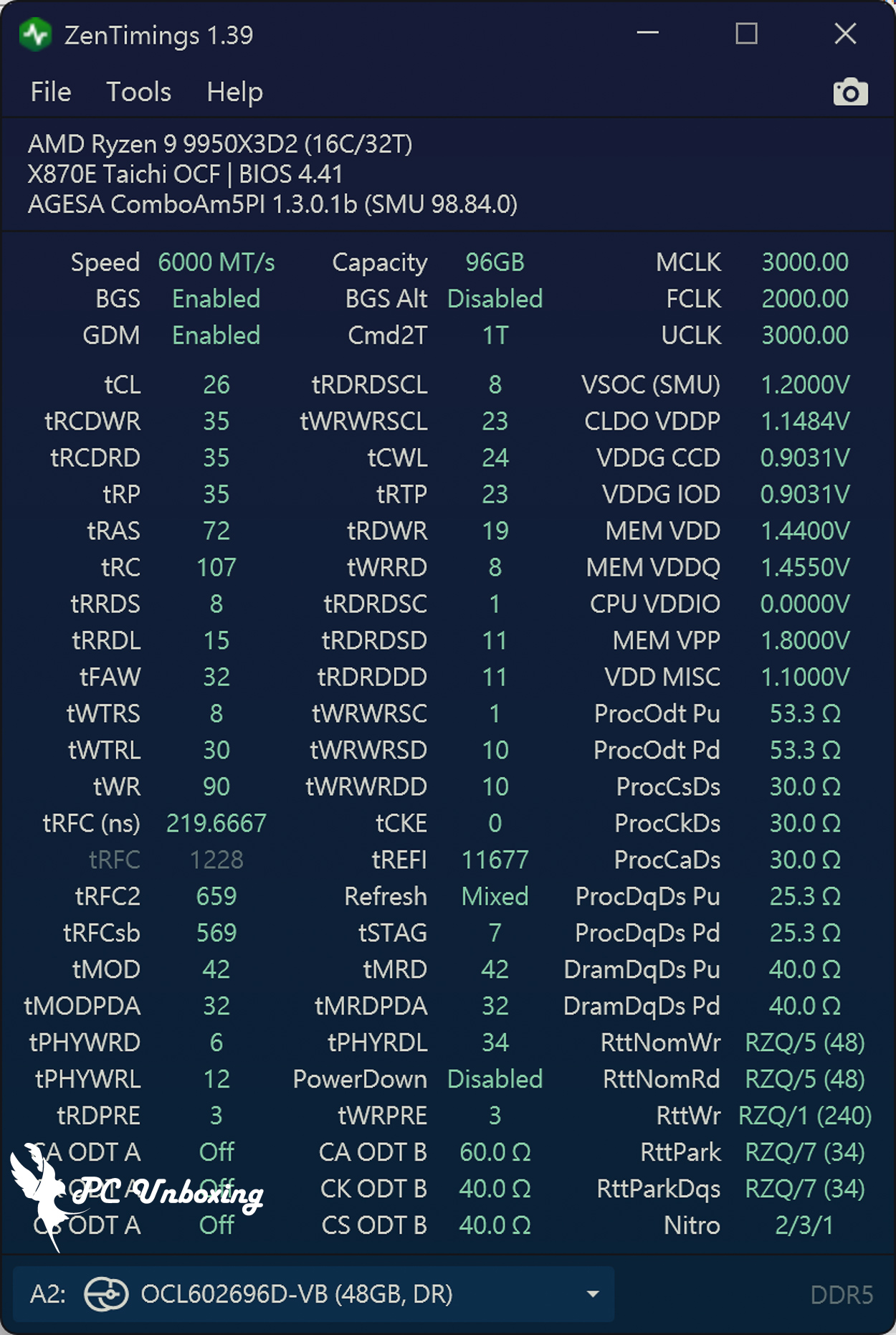
△ ZenTimings Information View_EXPO 1.
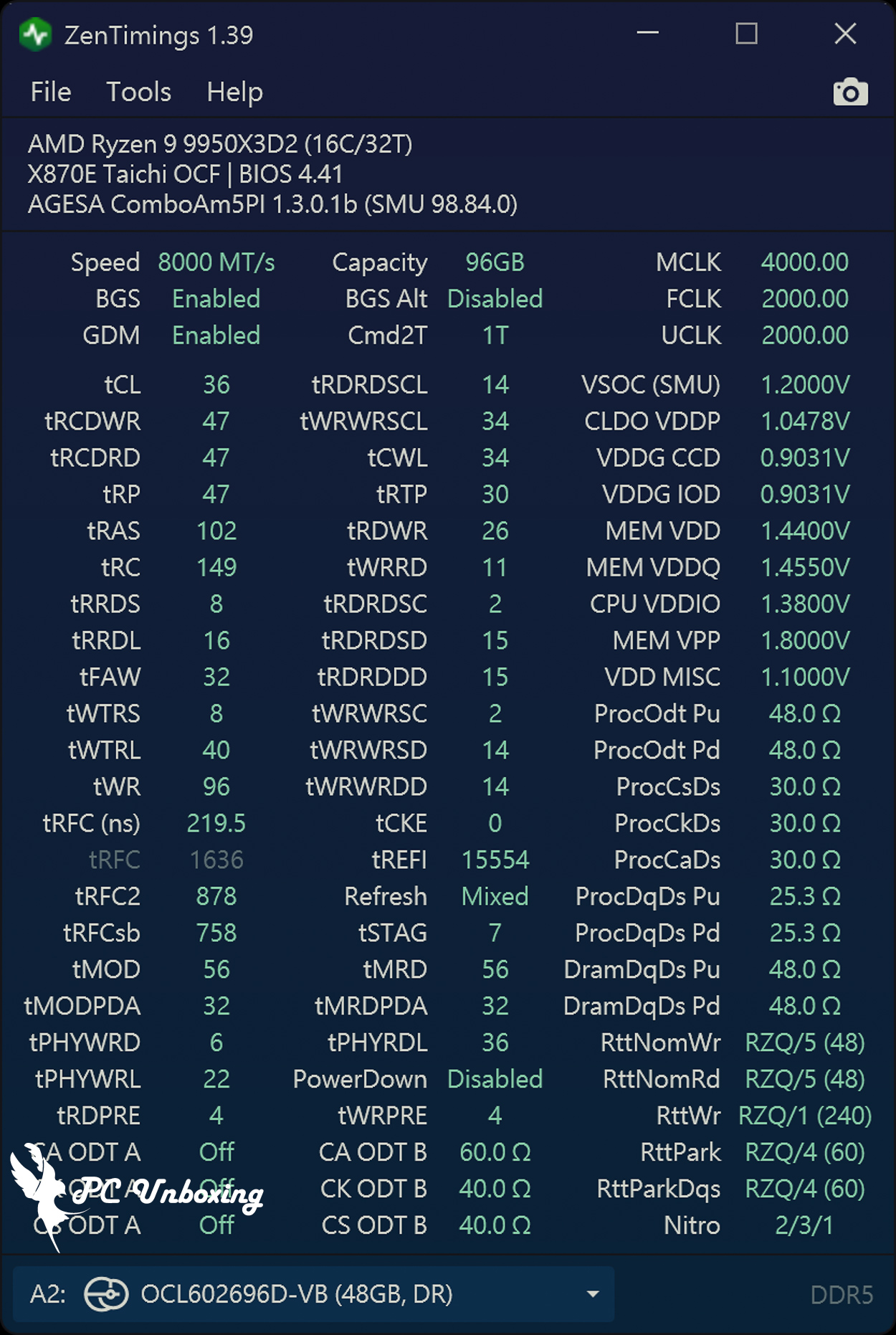
△ ZenTimings Information View_EXPO 2.
由 CPU-Z Let’s take a look at the test platform and the overclocking profile information written to the SPD HUB. On the SPD page, you can see that this memory module uses SK Hynix memory chips and includes Intel XMP 3.0 (Extreme Memory Profile) and AMD EXPO (Extended Profiles for Overclocking) one-click overclocking profiles.
However, only three Profile parameters are programmed in the SPD HUB, the rest are JEDEC timing frequency parameters.
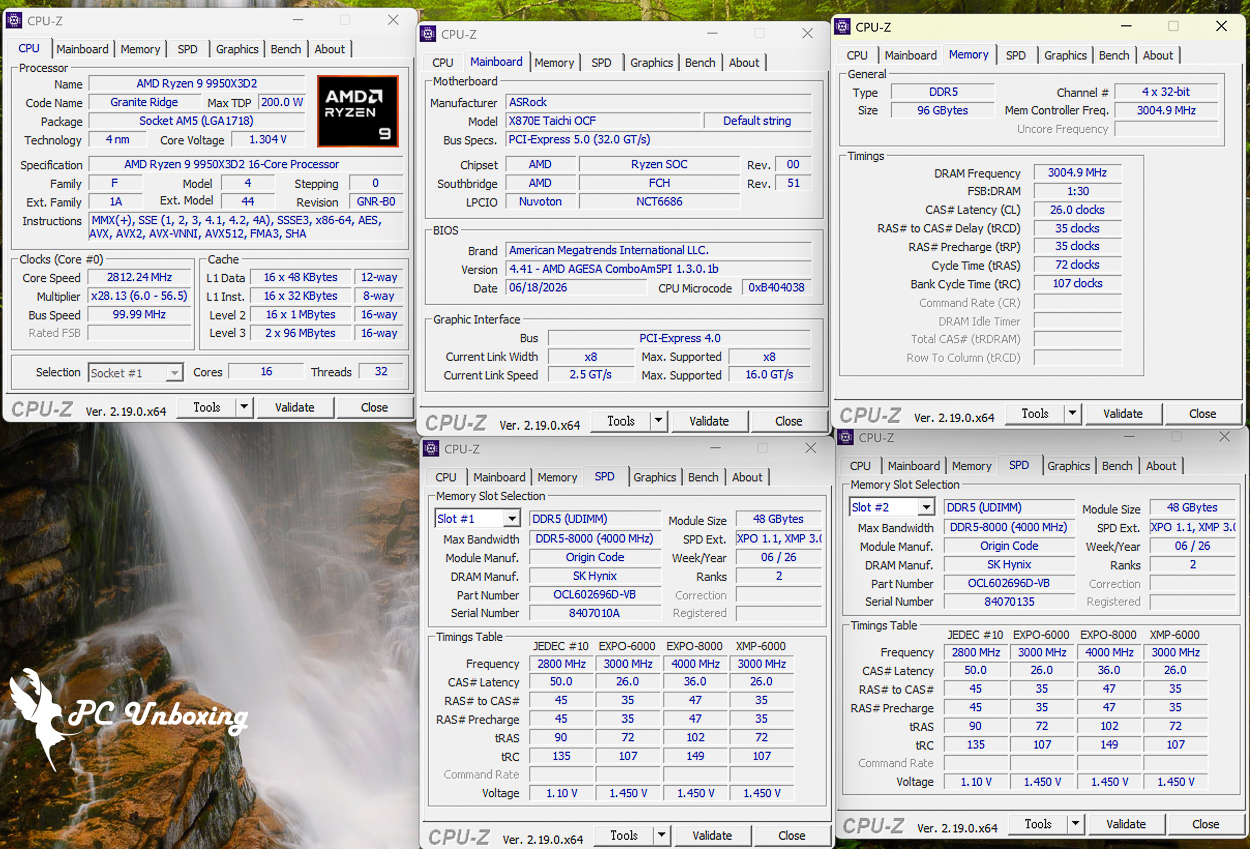
△ AMD platform CPU-Z with XMP / EXPO Profile 1 information.
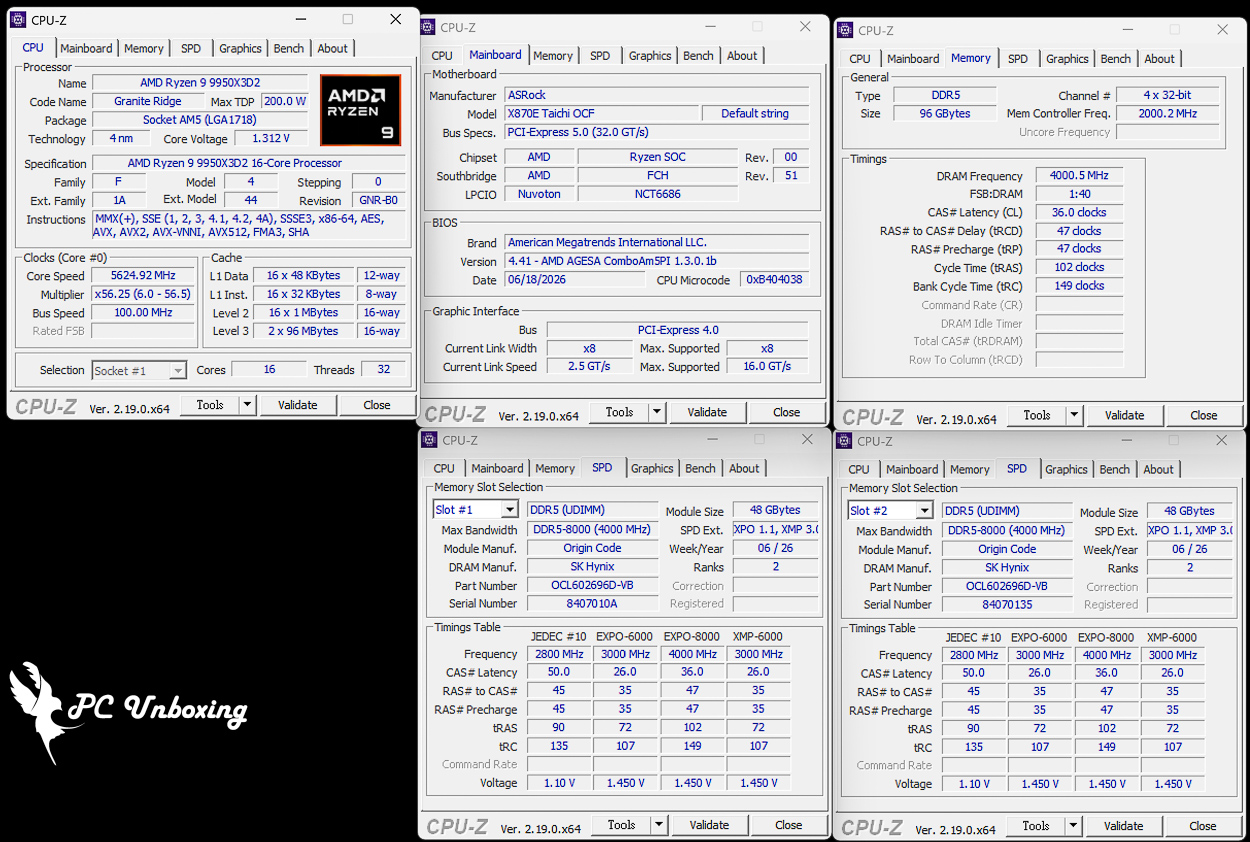
△ CPU-Z on an AMD platform, showing information with EXPO Profile 2 enabled.
AIDA64 Cache & Memory Benchmark It is mainly used to test the performance of processor caches and RAM. The read/write/copy bandwidth performance score represents the rate of transfer between CPU and memory, which means the efficiency of data throughput (the higher the score, the better), and the time delay score of accessing data indicates the responsiveness of the memory system.
With EXPO Profile 1 enabled, the read speed was 74.1 GB/s, the write speed was 80.5 GB/s, the copy speed was 73 GB/s, and the latency was 83.2 ns.
With EXPO Profile 2 enabled, the read speed was 77.8 GB/s, the write speed was 86.3 GB/s, the copy speed was 76.4 GB/s, and the latency was 85.1 ns.
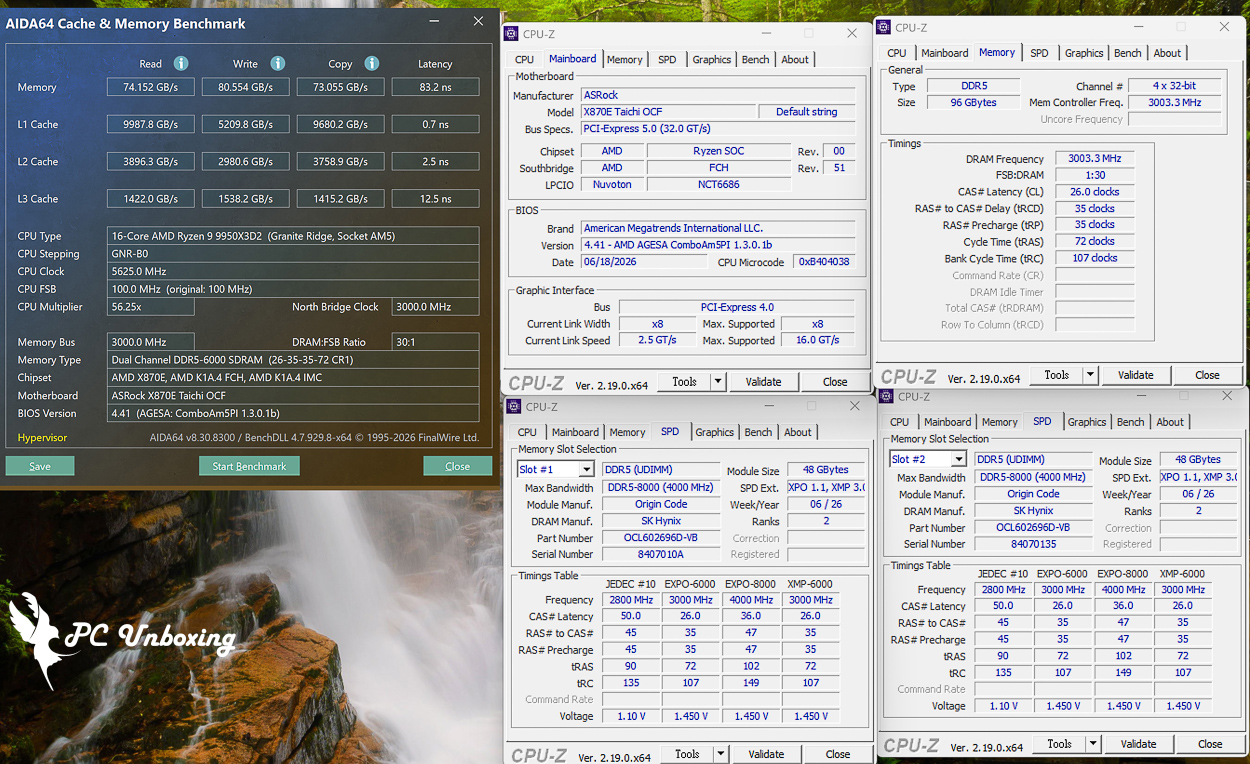
△ EXPO Profile 1: 6,000 MT/s CL26-35-35-72 1.45V—AMD platform test results.
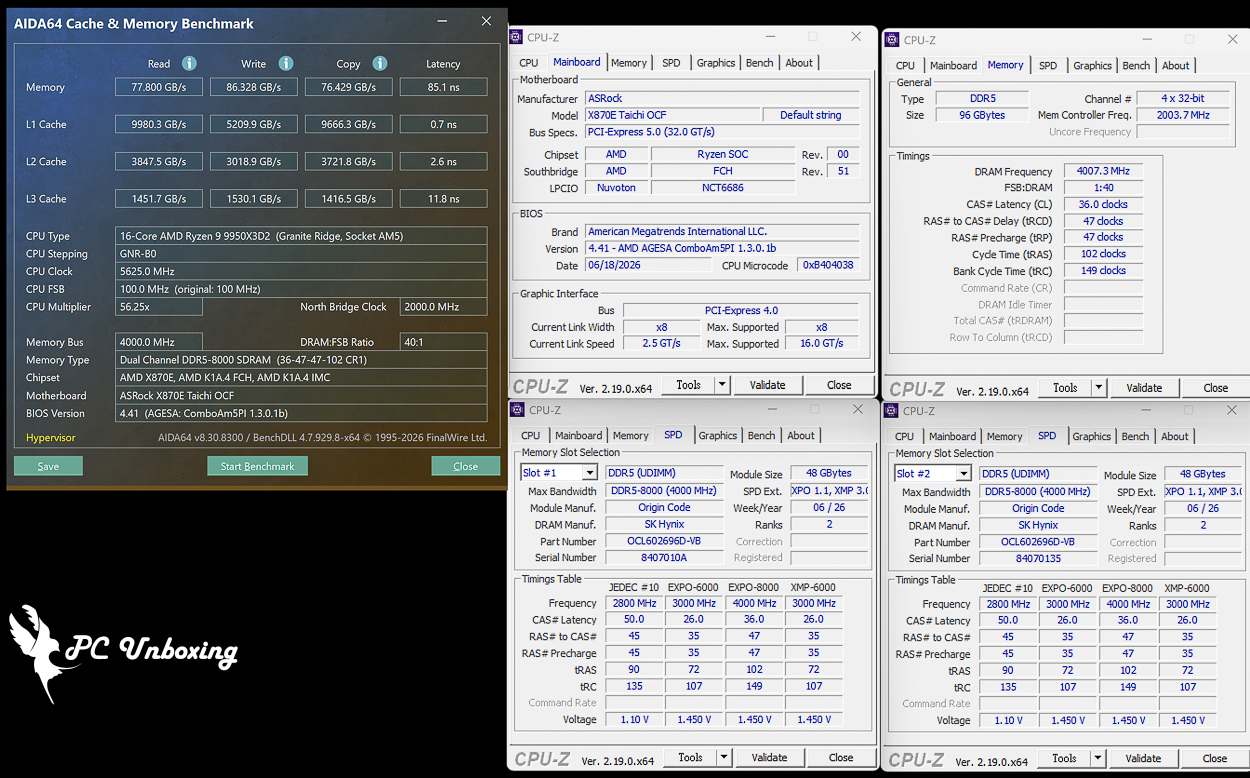
△ EXPO Profile 2: 8000 MT/s CL36-47-47-102 1.45V—AMD platform test results.
Real-World Performance Test of the Origin Code Vortex DDR5 Passive Memory Cooler
And then through OCCT MEMORY CONFIGURATION To test memory stress stability, the software’s memory load was manually set to 99%, and the memory test was configured using the Memory EXPO Profile 1 with parameters of 6000 MT/s, CL26-35-35-72, and 1.45V. The test was conducted in a sealed, air-conditioned room at an indoor temperature of 23 °C. Data was collected using OCCT to record the SPD Hub’s temperature after one hour of testing. Without an additional fan installed, the maximum temperature on the AMD platform was 56.5 °C.
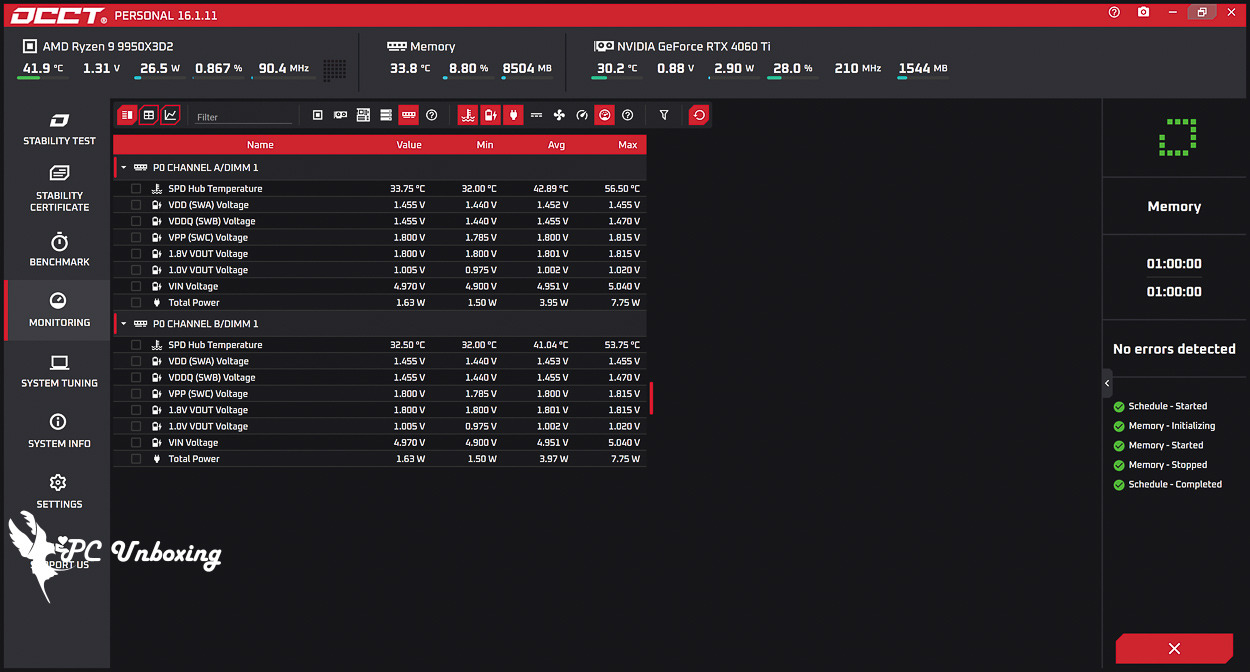
△ OCCT MEMORY CONFIGURATION Temperature and pressure test_no fan.
AM5 Overclocking Motherboard-Specific Solution: Origin Code Vortex DDR5 96GB Memory Review Summary and Buying Guide
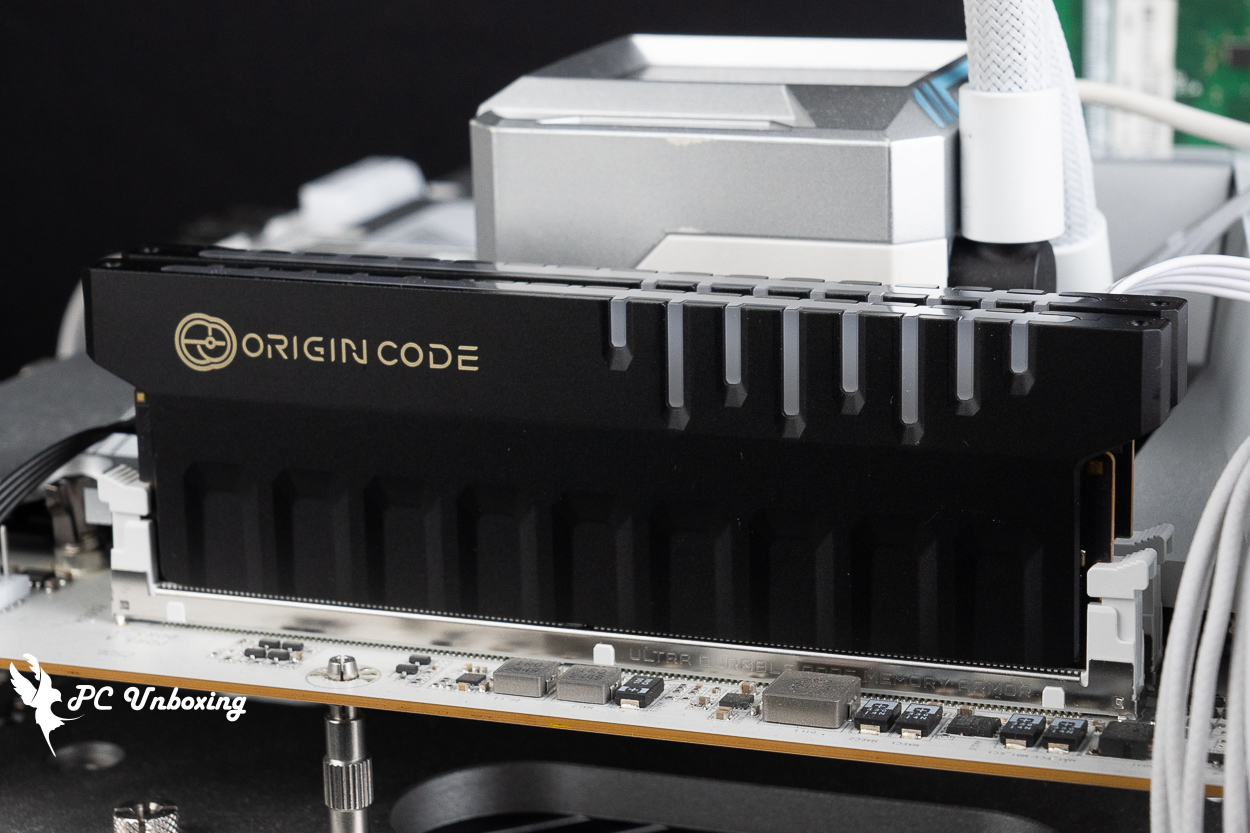
Personally, I believe that the Origin Code Vortex DDR5 96 GB (48 GB x 2) UDIMM—a high-capacity 8000 MT/s memory module featuring a DS (Double-Sided) design with 2R (2-Rank) layout—is the only one capable of demonstrating ASRock X870E Taichi OCF、GIGABYTE X870 AORUS TACHYON ICE、Total Master ROG CROSSHAIR X870E APEX, What are the advantages of these AM5 1DPC overclocked RAM models on motherboards?
Nowadays, most AM5 motherboards with decent components, when paired with AMD Ryzen 9000/7000 series processors and SS/1R memory, can already reach 8000 MT/s on many QVL lists, so it’s now quite common to see 8,000 MT/s on the AM5 platform with single-sided memory modules. However, speeds starting at 8,200 MT/s really put the processor’s performance to the test, or require using the Ryzen 8000 series—neither of which are very common options.
Therefore, with DS (Double Sided) chips, a 2R (2 Rank) layout, and an SPD-written overclocking profile set to a high frequency of 8000 MT/s, this memory kit—which combines high capacity, high frequency, and standard UDIMM (without CKD). Only this memory configuration can truly highlight the differences between AM5 1DPC overclocking-oriented motherboards and standard 4-slot motherboards. However, when it comes to overclocking memory compatibility, Intel platforms still outperform AMD by a wide margin, not to mention that Intel also fully supports CUDIMM and CQDIMM.
During the unboxing and testing process, I used ASRock X870E Taichi OCF 和 GIGABYTE Z890 AORUS TACHYON ICE When we tried to enable the EXPO 2 8000 MT/s Profile, we still encountered instability during testing—even with a BIOS version from the first half of 2026. We were only able to complete the tests after updating to the latest BIOS versions released in June. (I originally thought that since the specifications for this memory kit were released at the end of last year, using a BIOS from early this year should have been sufficient. However, I recommend that everyone update to the latest BIOS version before using it.)
In addition, this memory kit in ASRock X870E Taichi OCF During the stress test, the UCLK Mode with UCLK=MCLK/2 failed the EXPO 2 test in less than a minute, generating a flurry of errors and shutting down, while the UCLK=MCLK configuration passed the EXPO 1 test for one hour. Of course, this was just a quick and simple stress test, but it shows that EXPO 2 with UCLK=MCLK/2 is still more demanding. If EXPO 2 proves unstable in use, it is recommended to use EXPO 1 with UCLK=MCLK.
But I installed this set of memory in my work computer, which uses an AMD Ryzen 9 7950X andGIGABYTE X870 AORUS TACHYON ICE...I encountered a situation where I couldn't get it to work no matter which profile I selected. Even when using the QVL motherboard model specified by Origin Code itself, I still couldn't avoid issues related to CPU memory controller compatibility. If you're seriously considering purchasing this kit, I would recommend waiting until you're confident that your platform has good overclocking potential before making the purchase.

Yun
Drinks with less than full sugar are colored water. Crossing Turbid Creek, full sugar is not a crime!


 繁體中文
繁體中文  English